


Crunchyroll: Anime Streaming
Crunchyroll, LLC
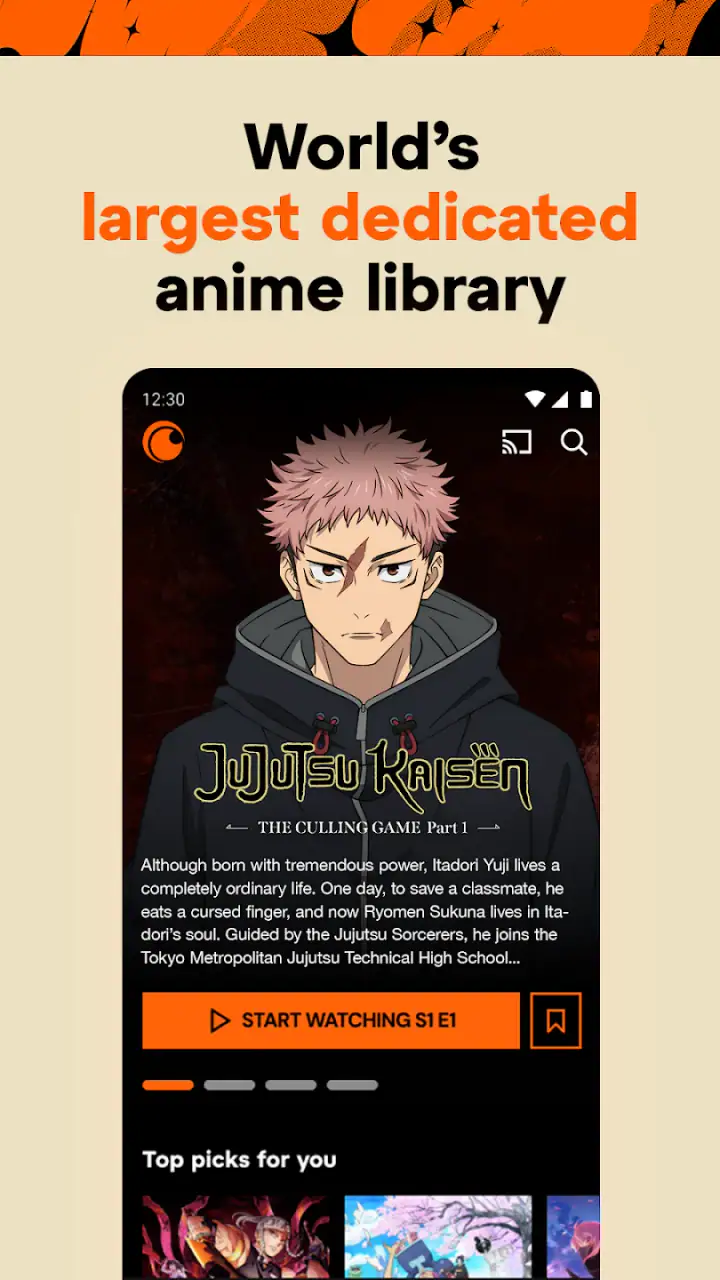
I installed Crunchyroll: Anime Streaming to see how well it works as an everyday home for anime rather than treating it as just another video app. My overall impression is positive: it is focused, easy to understand, and built around people who want anime to be the main event. The catalog-first approach makes sense when I already know what I want to watch, while the discovery tools help when I am in the mood for something new.
It is a free entertainment app from Crunchyroll, LLC, with optional purchases inside the app. The service has been available since December 20, 2010, and its long presence is noticeable in the way the app is centered on a dedicated anime audience instead of trying to serve every type of television viewer. It is rated Teen, so families should still check individual shows rather than assuming the whole library is suitable for children.
How the current Crunchyroll experience feels
The first thing I noticed is that the app has a clear purpose. I am not pushed through a general entertainment homepage filled with unrelated films, reality shows, or news. The browsing experience is organized around anime, which makes it quicker to move from opening the app to choosing a series. That focus is the biggest reason I would recommend it over a broad streaming service for a committed anime fan.
The app’s store reputation is strong, with a 4.7 average from around 3.9 million ratings and more than 100 million installs. Those figures do not guarantee that every phone, account, or viewing habit will feel perfect, but they do show that this is an established service rather than a small experimental player. I also found the large audience useful in a practical sense: popular titles are easy to recognize, and the service feels designed for regular viewing rather than occasional sampling.
Navigation is most comfortable when I approach it with a simple plan. If I want to continue a series, I start with my personal viewing area. If I want to browse, I use the genre and title organization instead of endlessly scrolling. That small change in habit matters because a large anime library can become overwhelming when I open it without knowing whether I want action, comedy, drama, fantasy, or something shorter.
Related News

Why WhatsApp Messenger Still Makes Everyday Communication Feel Easy

Jurassic World: The Game Is the Better Dino Tycoon for Strategic Players

Threads in Real Life: Who Should Join, Lurk, or Leave

How SHEIN Turned Shopping Into an Endless Content Feed

How to Make Fortnite Feel Smarter on Mobile

Should You Switch to Microsoft Outlook on Mobile?
I would not describe the interface as completely frictionless. A deep catalog naturally creates repeated choices, and discovering a lesser-known show can take more patience than returning to a familiar one. The app is at its best when I use search, categories, and my own watchlist deliberately. It is less satisfying if I expect the home screen alone to understand my mood every time.
Watching with subtitles or dubbed audio
One of the most important decisions for an anime streaming app is how it handles language preferences. My advice is to decide early whether I want subtitles or dubbed audio, then check the available version of a series before settling in. Availability can vary by title, so I would not assume that every show offers the same language options. This is especially important when I recommend a series to someone who prefers watching without reading subtitles.
For me, subtitles are the safer choice when I want access to a wider selection, while dubbed viewing is more convenient when I am cooking, exercising, or doing another task that keeps my eyes away from the screen. That trade-off is not unique to Crunchyroll, but it affects how useful the app feels in real life. A viewer who depends entirely on dubbing should inspect a show’s available versions instead of choosing based only on its artwork or title.
Gallery
The best everyday scenario is a short evening routine. I might open the app after dinner, continue the episode I started earlier, and add a new series to my list when I find something promising. On a phone, that makes the service useful for private viewing during a commute or a break. At home, it works better when I already know whether I am watching one episode or beginning a longer binge, because the size of the library can easily turn a quick break into a long search.
What has changed over the life of the service
Crunchyroll has had time to develop from a specialist anime destination into a mature mobile streaming product. I can see that evolution in the emphasis on discovery, personal viewing continuity, and a catalog broad enough to support different kinds of anime fans. The app no longer feels aimed only at someone following one famous series; it also accommodates viewers who move between seasonal releases, older favorites, and genres they have not tried before.
The important point is that product evolution does not remove the need for personal organization. A larger service can offer more choice while making the first decision harder. I get better results when I use the app as a library: save titles I genuinely want to watch, finish or remove abandoned shows, and avoid adding every interesting thumbnail. That workflow keeps the home screen more useful over time.
I also appreciate that the service is free to install. That lowers the barrier for someone who wants to test the catalog before spending money. At the same time, optional purchases range from $9.99 to $179.99 per item, so I would pay attention to the purchase screen and account choices before confirming anything. The free entry point is helpful, but it should not be confused with unlimited access to every possible benefit or viewing arrangement.
For a new user, I would begin with a few known titles rather than trying to explore everything. Search for one show I already trust, watch enough to understand how the app presents its episodes, and then use related recommendations to branch out. This method reveals whether the catalog fits my taste much faster than browsing popular sections without a clear starting point.
How the changes affect long-time viewers
Existing anime viewers are likely to benefit most from the app’s consistency of purpose. If I have already built a habit around watching anime regularly, a dedicated service reduces the need to switch between several general platforms. I can keep my viewing in one place, return to ongoing series, and use the same basic workflow whether I am catching up on an old favorite or sampling a new release.
There is also a psychological benefit to a specialized catalog. On a general streaming service, anime can be mixed into a much larger entertainment menu, which makes it easy to lose track of what I wanted to watch. Here, nearly every browsing path is relevant to the category. That does not mean every recommendation will suit me, but the surrounding choices are more likely to be useful.
The downside for established users is that loyalty can make limitations more noticeable. When I already know exactly which language track, episode order, or viewing arrangement I want, even a small amount of searching feels more irritating than it does for a first-time visitor. Dedicated services raise expectations because viewers assume their favorite category will receive especially careful organization.
I would also separate the app from the quality of an individual show. Crunchyroll can make finding and watching anime convenient, but it cannot make every series match my taste. A high rating for the app reflects broad user satisfaction, not a promise that every title will be excellent or that every release will suit every viewer. I treat the service as a strong tool for finding anime, not as a guarantee that the catalog will remove the need for personal judgment.
Where the service still has gaps
The biggest limitation is choice overload. A dedicated anime library is valuable precisely because it is substantial, but that size can work against casual viewers. If I only watch a few episodes each month, I may spend too much time deciding what to start. A general streaming service with a smaller, familiar selection may be more relaxing for someone who wants a quick recommendation and does not care about following the wider anime scene.
Another gap is the difference between catalog breadth and personal fit. A wide selection does not mean the specific show I want will have my preferred audio option, tone, length, or release pattern. I would check those details before committing to a long series. This is one of the most useful habits I developed with the app: treat the title page as a decision point, not merely a button to begin playing.
The Teen content rating also deserves practical attention. It gives a broad indication that the service is not aimed exclusively at young children, but it does not replace parental judgment. I would review a show before handing the phone to a child, especially when the child is browsing independently. Parents looking for a tightly controlled children’s video environment may find a dedicated kids’ service easier to manage.
Cost is another consideration. Since the app is free to download but includes optional purchases, I would think about how often I expect to use it and what access arrangement I actually need before paying. Someone who watches one familiar show may not see enough value in spending more, while a regular anime viewer may find the dedicated focus worthwhile. The right choice depends less on the installation itself and more on whether anime is a central part of my viewing routine.
Device habits can change the verdict too. I like the convenience of watching on a phone, but a small screen is not ideal for detailed animation, subtitles, or long sessions. If most of my viewing happens at home, I would consider how easily the app fits into my preferred larger-screen setup before making it my only anime source. If I mainly watch during short breaks, mobile access becomes a much stronger advantage.
Who should use it and who should look elsewhere
I would recommend Crunchyroll to someone who wants anime to have its own dedicated destination. It is particularly well suited to viewers who follow several series, enjoy exploring beyond mainstream titles, or want a focused alternative to general entertainment platforms. The free installation makes it easy to investigate, and the established audience suggests that the service has become a familiar option for anime fans worldwide.
I would be more cautious about recommending it to a person who watches anime only occasionally and wants a very small, handpicked selection. That viewer may prefer the convenience of a broad service already included in a household subscription. I would also suggest looking elsewhere for a young child who needs a tightly filtered environment, or for someone who refuses subtitles and does not want to verify dubbed availability title by title.
Compared with general streaming alternatives, Crunchyroll wins through specialization. I spend less time filtering out unrelated entertainment, and the browsing context is more relevant. General services can still be better when I want anime alongside live-action films, documentaries, or family programming in one subscription. In other words, Crunchyroll is not automatically the best replacement for every streaming app; it is the stronger choice when anime is the reason I am opening the app.
Compared with using scattered free video sources, the dedicated app offers a more coherent viewing routine. I can approach a series as part of an organized library instead of hunting through inconsistent uploads or uncertain episode order. The trade-off is that a focused service may ask me to accept its own access and purchase structure. I value the cleaner experience, but I would still compare my actual viewing frequency with the cost of optional features before treating it as essential.
Practical habits that make the app better
My first tip is to separate discovery from watching. When I am ready to watch, I go directly to a saved or familiar title. When I have time to browse, I explore categories and recommendations without feeling pressured to start something immediately. This prevents the common mistake of spending the whole evening searching and then choosing a show simply because it was the last thumbnail I saw.
My second tip is to confirm the language version before recommending a series to another person. This sounds obvious, but it avoids a frustrating situation where one viewer expects a dub and another expects subtitles. I also check whether the tone and age suitability match the person watching, since the Teen label applies to the app’s general content environment rather than acting as a detailed guide for every individual title.
My third tip is to use a small, intentional watchlist. I keep titles there for different moods: something light, something dramatic, and something I can follow over several evenings. That makes the app more useful when I am tired and do not want to browse. It also gives me a way to evaluate whether the service is genuinely serving my habits or merely encouraging me to collect more possibilities.
Finally, I would avoid judging the service after only one episode from one series. A dedicated anime platform has value in the combination of its catalog, organization, and repeat-use workflow. If I only test a single title, I am really reviewing that title and its presentation, not the broader reason to keep the app installed.
What I would watch as the service continues
For future use, I would pay attention to how the app balances an expanding library with simple discovery. More choice is helpful only when I can still find the right show quickly. I would also watch how clearly the service communicates language options, access choices, and any purchase decision, because those details have a direct effect on trust and everyday convenience.
I would keep an eye on the experience for different kinds of viewers as well. A long-time fan needs efficient tracking and discovery, while a newcomer needs guidance without feeling lost. Parents need clearer judgment around individual titles, and casual viewers need an easy path to something good without studying the entire catalog. The strongest future direction would serve these groups without weakening the focused identity that makes the app appealing.
My final opinion is that Crunchyroll is a convincing choice when anime is more than an occasional side interest. I like its focused purpose, its broad discovery potential, and the way it turns anime viewing into a repeatable routine rather than a hunt across unrelated services. I would still check language availability, consider the Teen rating carefully, and think about optional purchases before committing. For the right viewer, though, the dedicated anime focus is the feature that matters most, and it is the reason I would recommend Crunchyroll: Anime Streaming to a friend who wants anime at the center of their entertainment time.
FAQs for Crunchyroll: Anime Streaming
What is Crunchyroll and what content does it offer?
Crunchyroll is a streaming service specializing in anime, manga, and Asian dramas. It offers a vast library of popular anime series, including simulcasts of new episodes shortly after they air in Japan. The platform also provides manga for reading and a selection of Asian live-action dramas, making it a comprehensive destination for fans of Asian entertainment.
Is Crunchyroll available for free, or is a subscription required?
Crunchyroll offers both a free and a premium subscription model. With a free account, users can access a limited library with ads. A premium subscription removes ads, provides access to the full library, and offers simulcast episodes just one hour after they air in Japan. Premium users also enjoy offline viewing and high-definition streams.
On which devices can I watch Crunchyroll?
Crunchyroll is available on a wide range of devices, including smartphones and tablets (iOS and Android), web browsers, gaming consoles (like PlayStation and Xbox), smart TVs, and streaming devices such as Roku and Apple TV. This extensive compatibility ensures you can enjoy your favorite anime anywhere, anytime.
Does Crunchyroll offer content in multiple languages?
Yes, Crunchyroll provides subtitles in various languages, including English, Spanish, and French, among others. While the majority of content is in Japanese with subtitles, some shows are also available dubbed in different languages. This makes it accessible to a broad audience around the world.
How often is new content added to Crunchyroll?
Crunchyroll frequently updates its library with new anime episodes, particularly during new seasons when simulcasts become available. They also add new series and movies regularly. Fans can expect a steady stream of fresh content, enhancing the viewing experience and keeping the library diverse and up-to-date.
Pros
- Extensive library of anime titles.
- Simultaneous streaming on multiple devices.
- Offline viewing available for premium users.
- User-friendly interface with easy navigation.
- Frequent updates with new episodes.
Cons
- Ads in free version can be intrusive.
- Some content is region-locked.
- Limited offline downloads for free users.
- Occasional streaming quality issues.
- Subscription cost might be high for some.


